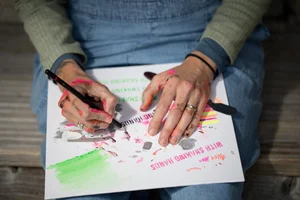
How To Be The Best At Everything
I am so over this bullshit. The other day I came across two books side by side on a shelf in a charity shop, one teaching boys how to win a fight and the other telling girls how to be pretty. Looking at the title and the cover I assumed they were some dusty old relic from the 1950s. I check the imprint, because surely, surely this is some museum-piece, but no…
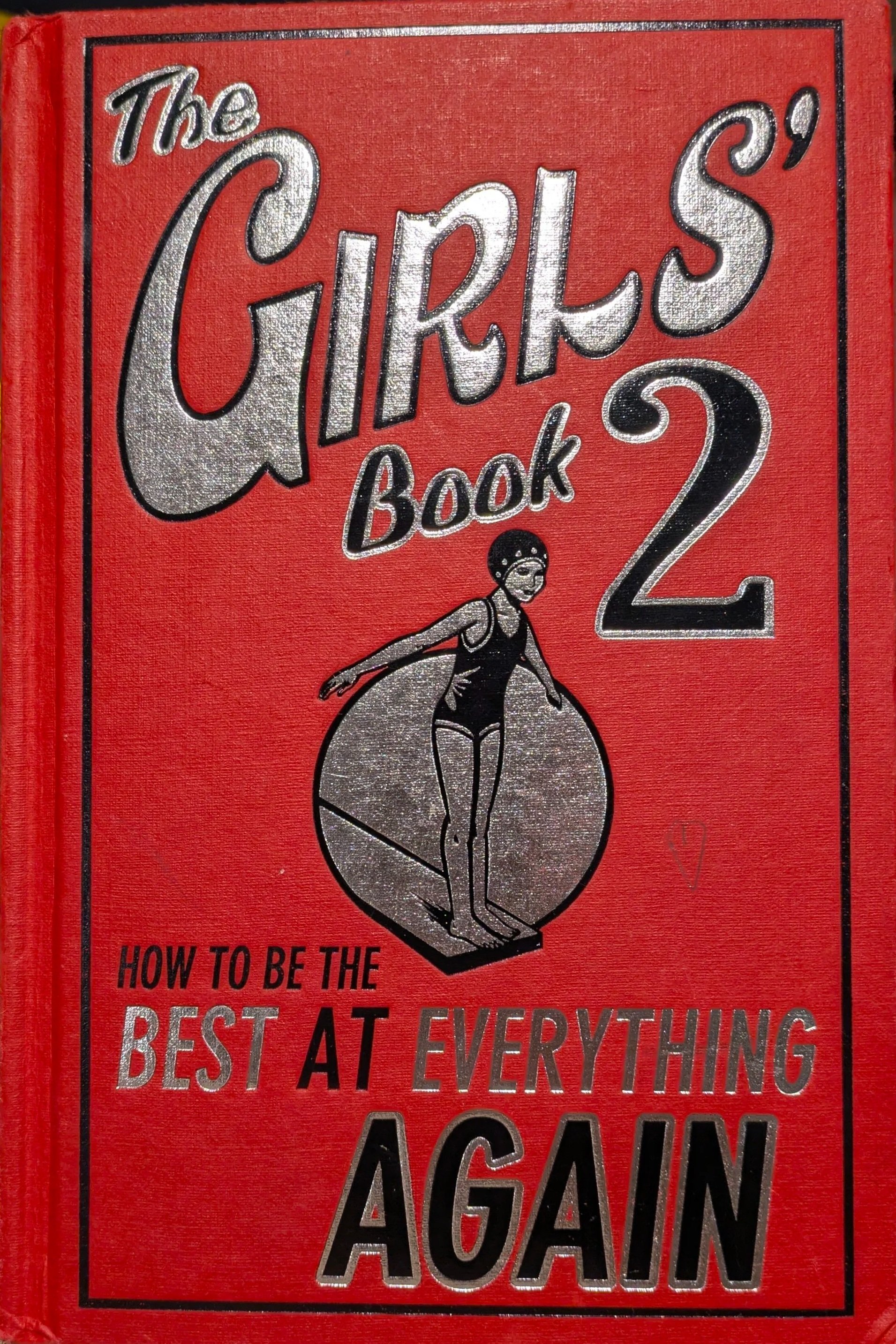
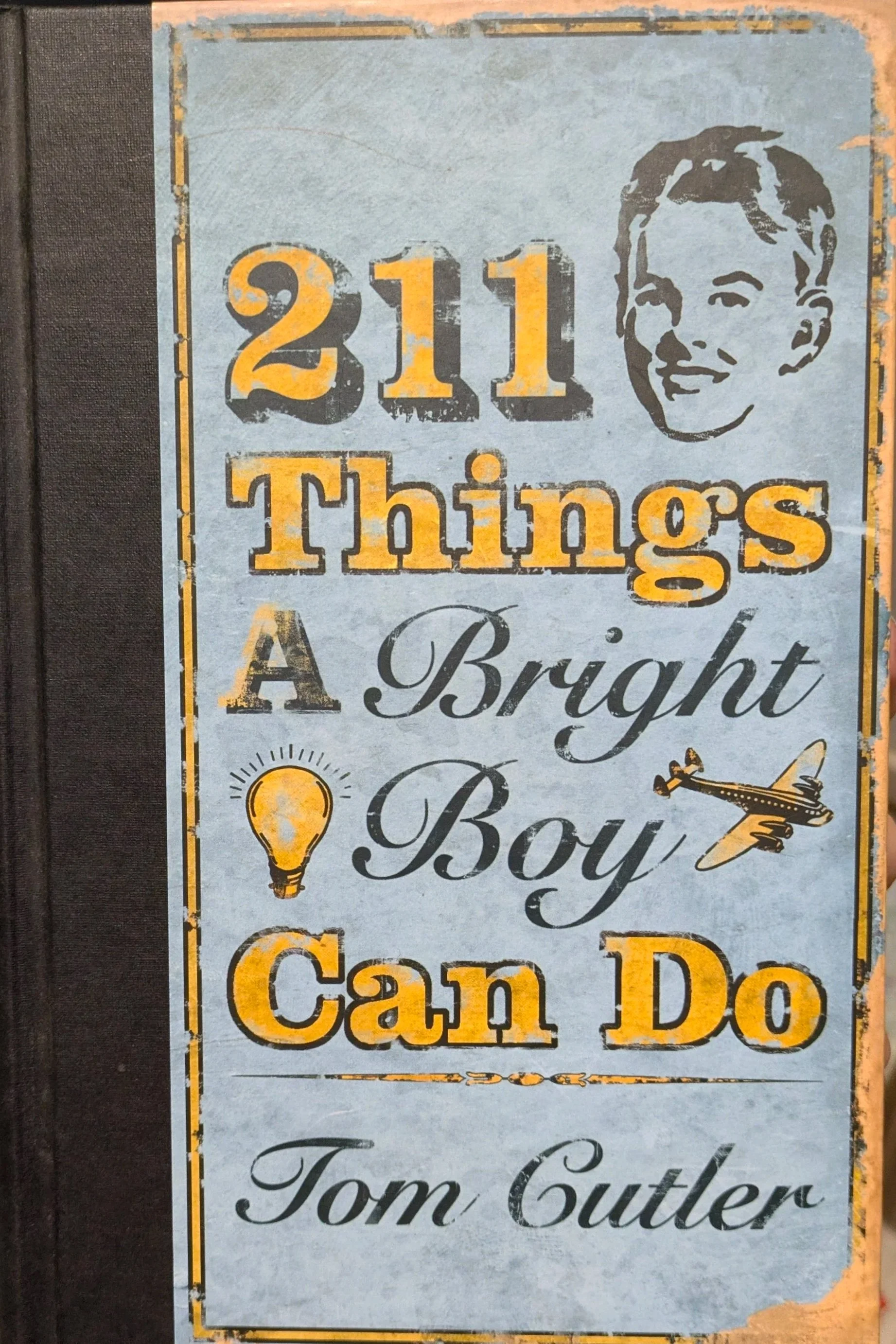
The books, The Girls' Book 2: How to Be the Best at Everything Again and 211 Things a Bright Boy Can Do, were published in 2008 and 2006! And of course the boys' book is blue and the girls' red, obviously (imagine me eyerolling both in the shop and as I type this). 20p each. It was almost like they'd been waiting for me.
So, late 2000s. Not 1958, not post-war. Not even 1988. 2008. I yelped. Actually yelped, out loud, the kind of noise that makes a stranger glance over. My mum came across to see what the fuss was. She looked at the books, looked at my face, and said, "Are you going to be the next Germaine Greer?"
She's come to accept that I spend a lot of my time being outraged these days. Being a middle aged post menopausal woman, I don't keep quiet about things anymore. I rage and roar, and if we work together, perhaps we can rise up against this kind of bullshit.
Anyway, by the time I'd shut those covers the whole painting had already arrived. Fully formed. One second. Jaw on the floor, brain already mixing the paint. Because I didn't need to think about what these books meant. I'd been living inside what they meant my entire life.
OK, brace yourself… Here are some of the real chapters in these books… I'm not paraphrasing.
The girls' book will teach her how to look beautiful tomorrow. How to deal with spots. How to break bad beauty habits. How to tell a hairdresser what she really wants. How to be the best cheerleader. How to wrap a present beautifully. How to get gum out of her hair.
The boys' book will teach him how to fight a bull. How to make a citizen's arrest. How to stop a train with his bare hands. How to drink a yard of ale without drowning. And, I promise I am not making this up, how to judge a woman's bra size at a glance.
One child is being prepared for the world. The other is being prepared to be looked at while she stands in it.
And here's what got me, what really got me, standing there in the aisle. This isn't the strange bit. This is the normal bit. This is just the version somebody bothered to print and bind. The actual conditioning never stops, and it never announces itself this neatly. It starts before she's even born.
There's a recognised thing now called gender disappointment, the dip some parents feel when they learn they're having a girl. It's documented in the medical literature, written up in the BJPsych Bulletin, increasingly turning up in UK perinatal services. [1] The disappointment can arrive before the person does.
Then she's here, and she's in pink before she can hold her own head up. And the pink isn't the problem, the pink is just the flag. It's what comes with it. The doll instead of the engine. The kitchen set instead of the construction kit. A 2022 review found girls were five times more likely than boys to be steered towards dance and dressing up, three times more likely towards baking. [2] And before you say it's just toys, the engineers themselves have linked exactly this, the kit a four-year-old is handed, to why so few women end up in their industry decades later. [3] She is being sorted before she can read.
She gets to school and the sorting carries on, just quieter. Decades of classroom research, going right back to the Sadkers' work in the United States, found teachers give boys more attention, more questions, more time, while girls' work gets praised for neatness rather than content. [4] Boys learn to call out. Girls learn to wait to be noticed. And somewhere in there she works out that a loud boy is confident and a loud girl is bossy, long before she has the words for why that stings.
Then puberty, and the volume goes up. The catcalling starts, and I mean starts young, the kind of thing grown women still flinch to remember. Her body becomes a thing that happens to her in public. The school dress code starts policing her hemline rather than anybody else's behaviour, and there it is again, the oldest trick, make her responsible for what's done to her.
And the choices start narrowing. This isn't a feeling, it's on the exam sheets. By A level, only about 23% of physics entries in the UK are girls, and computing is worse, roughly three girls for every twenty boys. [5] By the time you reach the engineering workforce, women are about 16%. [6] Girls match or beat boys in science at GCSE and then something quietly peels them away from the subjects that lead to the best-paid, most powerful jobs. Call it choice if you like. I call it a lifetime of being told, gently, with everyone's good intentions, that those rooms aren't really for her.
She gets a job and meets the pay gap and the glass ceiling, both alive and well. She learns to flatten herself, to show no feeling, because passion in him reads as drive and the same passion in her reads as hysteria. She has a baby and watches it become a penalty instead of a life event. And the whole time, underneath all of it, the low constant hum of working out which street is safe, which carriage, which car park, the maths every woman does without even noticing she's doing it.
And just when she might catch her breath, her body does the one thing it was always going to do, and the system that was never built for her stops seeing her at all.
This is the bit that makes me want to throw something. The NHS research body spent 0.3% of its entire budget on menopause in a single year. [7] Sixty thousand women have walked out of UK jobs because their symptoms had nowhere to go and no one to help. [8] And here's the comparison that should be on a billboard. Premenstrual syndrome affects ninety percent of women and gets about a fifth of the research money that erectile dysfunction gets, and that only affects nineteen percent of men. [9] Between 2019 and 2023, investors put over a billion dollars into companies working on erectile dysfunction. A billion! Companies working on endometriosis, which wrecks the fertility and the working lives and the actual daily existence of at least one in ten women, got forty-four million. Twenty-eight times less. [10] One is an inconvenience. The other can take everything. Guess which one the money went to.
And it goes deeper than money, right down into the science itself. Women were largely shut out of clinical drug trials until the 1990s. The law that finally required them to be included in the US only landed in 1993, which means a huge amount of the medicine in your cupboard was tested on male bodies and dosed for male bodies. [11] As recently as 2019, women were still underrepresented in trials for the diseases most likely to kill them. So she gets misdiagnosed more than he does, right to the end, even for a heart attack, the thing we're all told to watch for. [12]
And for some women the line at the end isn't a metaphor at all. It's literal. It's femicide.
Back to those two books on the shelf.
I skimmed the boys' book before I left the shop. There's a note at the front, the author explaining himself. And he spends an entire paragraph, a good chunk of his word count, justifying why the book is called 211 Things and not a rounder, tidier 200. Round numbers are difficult, apparently. He brings in Catch 22. He brings in The 39 Steps. The number, you understand, needed defending.
The word "boy" gets nothing.
Not a sentence. Not a flicker. It never occurs to him that anyone might ask why it's a bright boy and not a bright child, because nobody was ever going to ask. It didn't need defending. It was the water. The number was a choice he had to account for. The gender was just the air in the room. And that, right there, sat on the page in black and white, is the entire thing I have spent my whole life trying to make people see.
So no, standing in that shop, I wasn't shocked. Shock would've meant I expected better. What I felt was: of course. Of course this got written. Of course it got published. Of course it ended up here on a shelf for 20p with nobody batting an eye. It isn't the exception. It's the rule, just for once holding still long enough to be photographed.
So I made the painting. A boy and a girl, the way those books would have them. And down the girl's dress, written over her in red, top to bottom, I wrote the names.
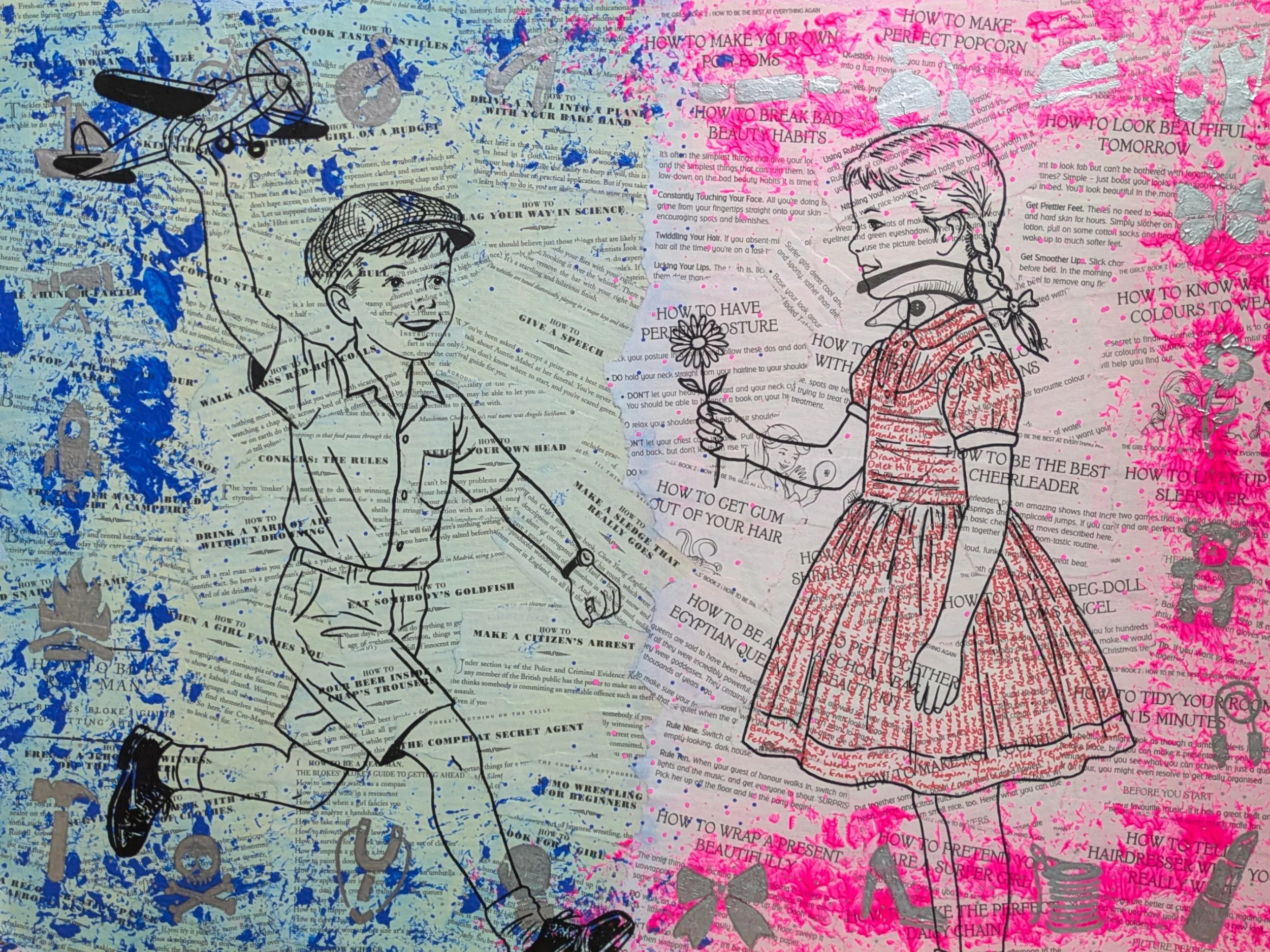
124 women and girls, killed by men in the UK in 2022. [13] Every single one of them was a girl once. Every one of them had a toy box. A school photo. A body she was taught to say sorry for before she understood why. And then she became a name in a report that almost nobody reads unless they have to.
That's femicide, and the pretty book and the dead women are not two different subjects. They are the first chapter and the last chapter of the exact same story, the one that says her job is to be smaller, quieter, more pleasing, less. It is a spectrum, and we have spent so long calling the early part of it harmless that we lost the right to act surprised by the end of it.
So 20% of everything this piece ever makes goes to the Femicide Census, the organisation that counts those women so the rest of us can't pretend we didn't know. That's on top of the standing 10% from every print I sell that goes to Rape Crisis. Because rage with nowhere to go is just a scream into a pillow, and I am done screaming into pillows.
The print isn't in the shop yet. It will be, once it's been properly photographed, and when it goes live the split above goes live with it. If you want to know the moment it lands, follow along on Instagram at @withshakinghands or get on the newsletter. I'd rather you heard it from me than missed it.
But the names are not where the story stops. They're why I picked up the brush.
So here's what I believe, on the days I can hold onto it. That book got published in 2008 and barely anyone blinked. Try publishing it now. Try putting how to judge a woman's bra size at a glance on a shelf aimed at boys in 2026 and watch what happens. It would be torn apart. It would never make it past a single meeting. And that is not nothing. That is the ground shifting under our feet.
It shifts because we make it. Page 3, topless women in a national newspaper next to the football, ran for forty-four years and then it stopped, because enough people refused to keep treating it as normal. The things that look permanent are only permanent until they aren't. Slowly, far too slowly, with too many casualties along the way. But it moves, and it moves because we keep being loud.
My daughter is growing up in a world that at least argues about this now. That at least has the words. My mum's generation mostly didn't get the words. And whatever my granddaughter inherits, I want it to be a world where two books like that on a shelf would stop a hundred people in their tracks, not just one furious woman with paint under her nails.
In the painting the girl stands face to face with the boy, the names written down her dress like a warning and a roll call both. She isn't cowering and she isn't gone. She's right there, holding the ground, eye to eye with everything she was told to be smaller than.
I'm keeping the title. How to Be the Best at Everything. I'm not keeping it because I agree with it. I'm keeping it because it's the whole joke and the whole tragedy folded into five words a publisher genuinely thought girls needed to hear. Be the best. At everything. Quietly. Prettily. Nobody ever handed her the boys' book. Nobody told her she was allowed to fight the bull, make the arrest, stop the train with her bare hands.
She can do all of it. She always could.
Somebody just needs to write that book.
Receipts
- Gender disappointment, the experience of sadness on learning a child's sex is not what was hoped for, including son preference, is documented in UK medical literature and perinatal services. Source: 'It's a girl! Is gender disappointment a mental health or sociocultural issue?', BJPsych Bulletin, 2024.
- Girls were five times more likely than boys to be encouraged toward dance and dressing up, and three times more likely toward baking. Source: Di Nonno research, reported via Latana, 2022.
- UK toy bias in early childhood has been linked by bodies including the Institution of Engineering and Technology to the ongoing underrepresentation of women in STEM careers. Source: Institution of Engineering and Technology (IET), cited via Diversity in Toys, 2023.
- Teachers give boys more attention, questions and instructional time, while girls' work is more often praised for neatness or appearance than content. Source: Sadker and Sadker, 'Failing at Fairness', foundational US classroom observation research, replicated widely since.
- At A level, around 23% of physics entries and roughly 22% of computing entries in the UK are girls (about three girls for every twenty boys in computing). Source: WISE Campaign / EngineeringUK A level analysis, 2023 to 2024.
- Women make up approximately 16.5% of the UK engineering workforce. Source: EngineeringUK, 2023.
- NIHR spent 0.3% of its £1.25bn research budget on menopause research between April 2022 and April 2023 (6 of 852 funded studies). Source: UK Parliament petition citing NIHR data, 2024.
- Over 60,000 women have left the UK workforce due to menopause symptoms. Source: World Economic Forum / NHS Confederation, "Closing the Women's Health Gap" reporting, October 2024.
- Premenstrual syndromes affect 90% of women and receive roughly one-fifth the research funding given to erectile dysfunction, which affects 19% of men. Source: The Medical Futurist, 2022.
- Between 2019 and 2023, erectile dysfunction companies attracted $1.24 billion in investment worldwide. Endometriosis companies, treating a condition affecting at least 1 in 10 women, attracted $44 million, around twenty-eight times less. Source: Healthcare Today, analysing World Economic Forum / McKinsey Health Institute data, 2024 to 2026.
- Women were largely excluded from clinical drug trials until the US NIH Revitalization Act 1993 mandated their inclusion; as of 2019 women were still underrepresented in trials for leading diseases. Source: NIH Office of Research on Women's Health; AAMC, 2024, citing Harvard Medical School analysis.
- Women are more likely than men to be misdiagnosed following a heart attack. Source: British Heart Foundation, 2019.
- 124 women and girls were killed by men in the UK in 2022. Source: Femicide Census 2022 report (dedication list).
Sources checked at time of writing. Figures and reports current as of June 2026.